
The most common question we hear from parents is: “Is my child old enough?” Most children are ready somewhere between 5 and 7 years old, but a few signs of readiness matter much more than age. Here is how to tell, and what learning looks like at every stage.
In short
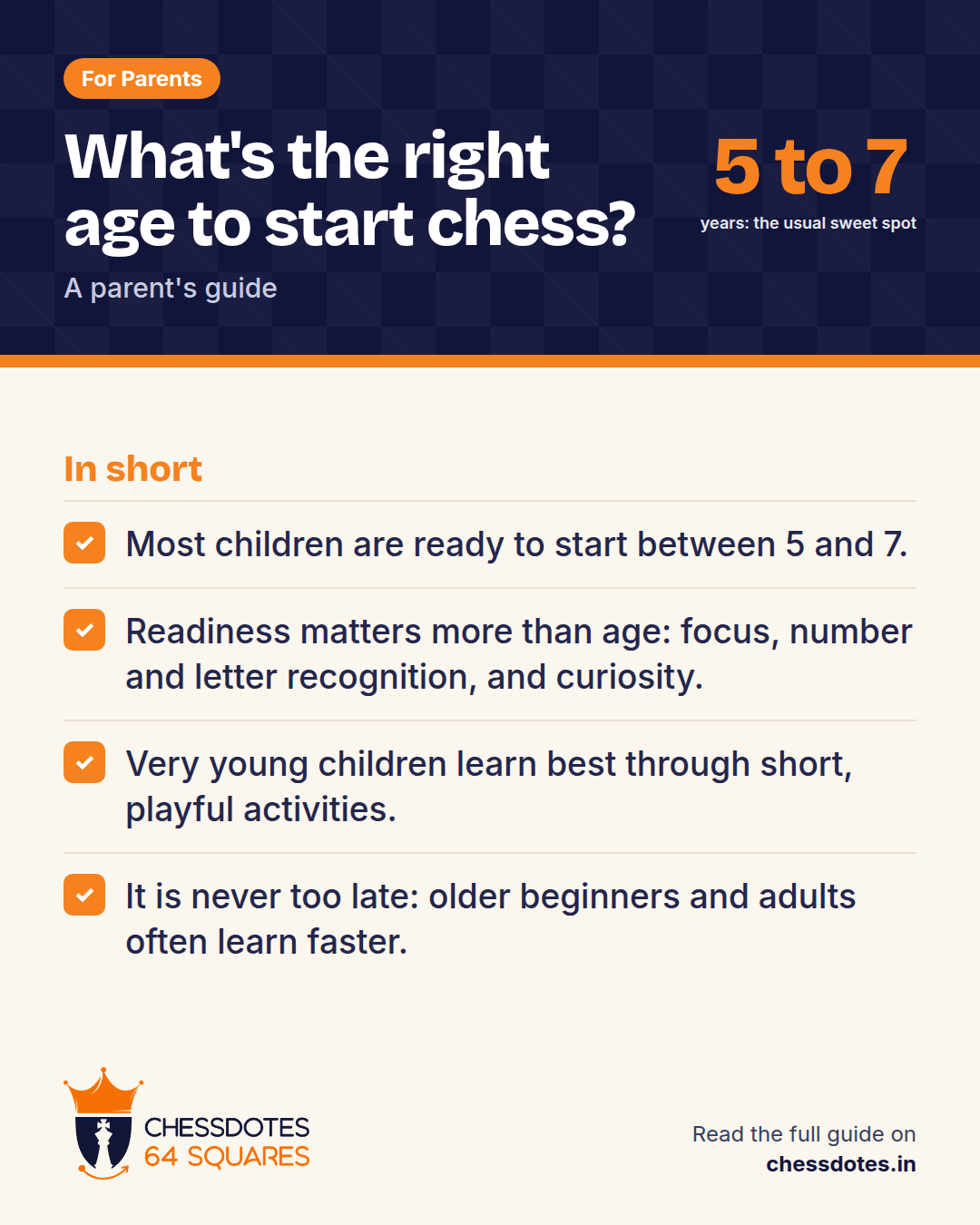
- Most children are ready to start between 5 and 7.
- Readiness matters more than age: focus, number and letter recognition, and curiosity.
- Very young children learn best through short, playful activities.
- It is never too late: older beginners and adults often learn faster.
In this article
Signs your child is ready
Readiness checklist
If your child ticks four or more of these, they are very likely ready. If not, don’t worry. A few months can make a big difference at this age, and there are simple things you can do at home in the meantime.
What learning chess looks like at each age
Chess by age
| Age | What we focus on | How classes feel | Typical class length |
|---|---|---|---|
| 4 to 6 | How pieces move, simple captures, mini-games on part of the board | Short and playful, lots of praise | 30 to 45 min |
| 7 to 9 | Full rules, checkmate patterns, basic tactics, first tournaments | Puzzles, practice games, small rewards | 45 to 60 min |
| 10 to 14 | Opening principles, tactics, endgames, game analysis | Structured lessons, homework, tournaments | 60 to 90 min |
| 15+ and adults | Everything above, faster; strategy and competition | Discussion-based, self-driven study | 60 to 90 min |
Ages 4 to 6: learning through play
Young children don’t learn chess by listening to long explanations. They learn by doing. We use mini-games: only pawns, or a single rook trying to capture pawns, or a “knight’s journey” across the board. Each game teaches one piece or one idea. By the time they play a full game, every piece feels familiar.
Ages 7 to 9: the sweet spot
This is when most children make the fastest progress. They can concentrate longer, understand rules and ideas, and enjoy the competition. Many of our students play their first tournament at this age.
Ages 10 to 14: building real skill
Older children can study openings, calculate longer sequences, and analyse their own games. If they want to compete, this is the age to plan a tournament calendar and work towards a FIDE rating.
Teenagers and adults: never too late
Many strong players started at 10, 12 or later. Older beginners often learn faster because they concentrate longer and understand explanations quickly. Adults are welcome too: chess is a lifelong game, and a lovely way for parents to play with their children.
Is earlier always better?
Starting young helps only if the child enjoys it. Pushing a child who isn’t ready can make chess feel like a chore, and they may drop it for good. We would rather a child start at 7 and love chess than start at 4 and quit at 6.
Watch for these signs
How to introduce chess at home
A simple start at home
Start with the board
Set up the board together and name the pieces. Make it a story: the king is important but slow; the queen is powerful.
One piece at a time
Teach the rook first, then the bishop, then the queen, king, knight and finally pawns.
Play mini-games
“Pawn wars” (only pawns, first to reach the other side wins) is a great first game.
Keep it short
10 to 15 minutes is enough. Stop while it’s still fun.
Let them win sometimes
Early wins build love for the game. Correct mistakes gently.
How to find out if your child is ready
The easiest way is a trial class. Our coaches watch how your child responds, check their attention span, and give you an honest answer: start now, or wait a few months. There is no pressure either way.
Frequently asked questions
Q. Can a 4-year-old learn chess?
Some can, especially through play-based activities on a small part of the board. Many children are more comfortable starting at 5 or 6.
Q. My child is 12. Is it too late to become good?
No. Many strong players started at 10 to 12 or later. Older beginners often learn faster.
Q. Should I teach my child first or go straight to classes?
Either works. Teaching the pieces at home is a nice start, but a coach builds good habits from the beginning.
Q. How long before my child can play a full game?
Most beginners play full games confidently within 2 to 4 months of regular classes.
Q. Can parents learn alongside their children?
Yes. Playing together at home is one of the best ways to keep children interested. Ask us about adult classes.
Keep reading
Not sure if your child is ready? Let a coach check.
Book a trial class at ChessDotes 64 Squares. Call or WhatsApp +91-9405520323.