
Blog
Ideas, lessons and chess news.
Tips for young players, notes for parents, and stories from the chess world.
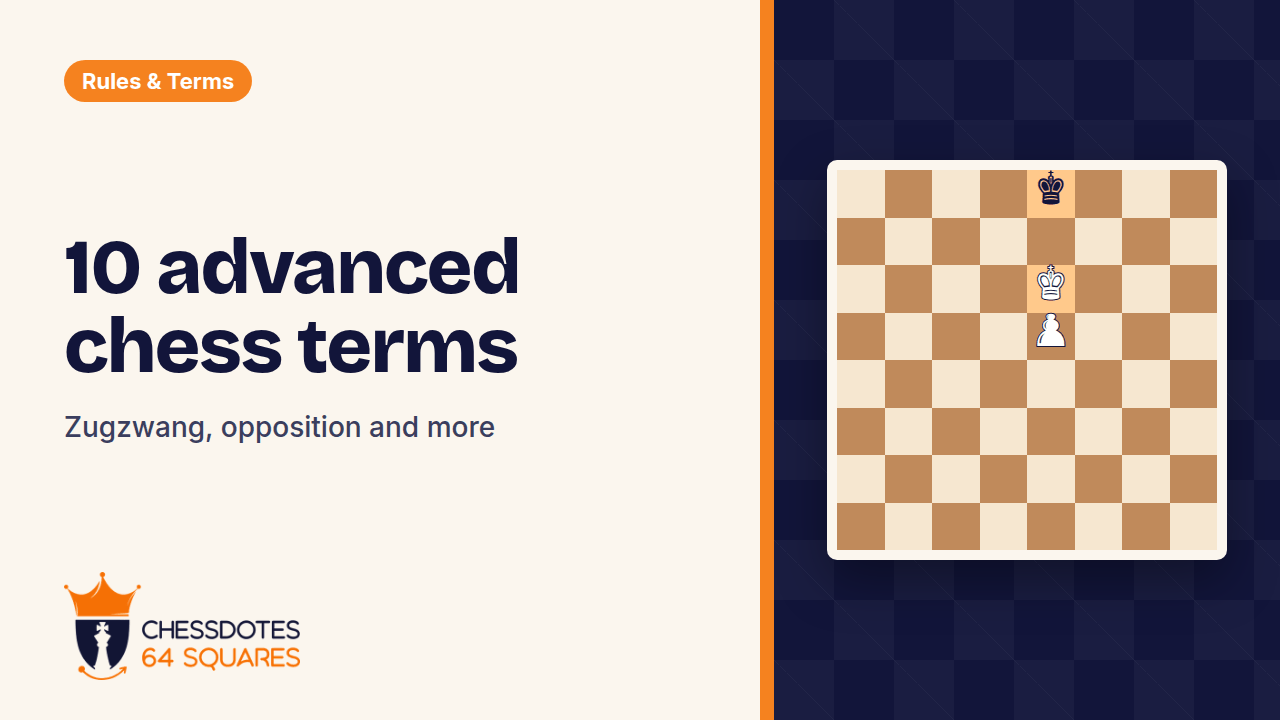
Zugzwang, opposition and more: 10 advanced chess terms explained
Zugzwang, opposition, zwischenzug, prophylaxis, outposts and passed pawns: 10 advanced chess terms explained simply, with diagrams and examples.
How to read and write chess notation (a beginner’s guide)
Learn algebraic chess notation: squares, piece letters, captures, checks, castling and promotion, plus how to fill a tournament scoresheet correctly.
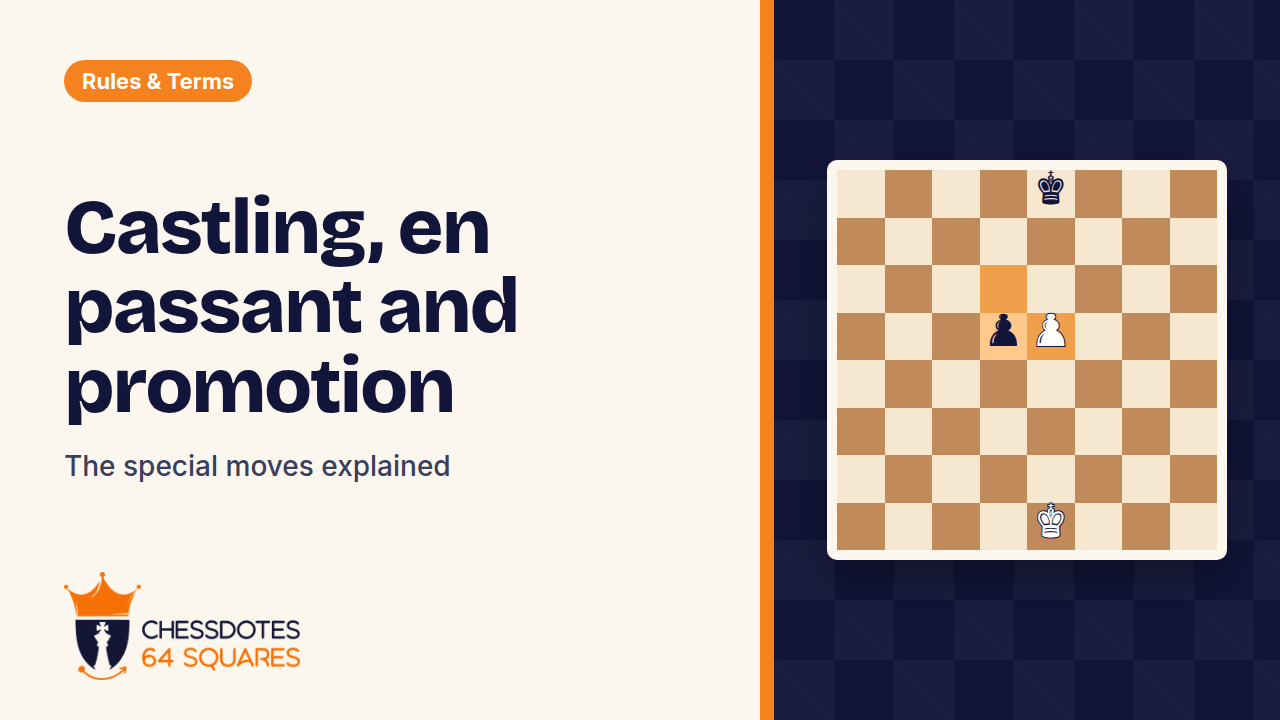
Castling, en passant and promotion: the special moves explained
Castling, en passant and pawn promotion are the three special moves in chess. Here’s how each works, the exact rules, and the mistakes beginners make.
Chess terms every beginner should know: an A to Z glossary
Blunder, fianchetto, fork, gambit, j’adoube, stalemate, zugzwang and more: an easy A to Z glossary of the chess terms every young player hears.
Planning a school or society chess tournament: a complete checklist
Organising a chess tournament at your school or society? A complete checklist: format, venue, equipment, arbiters, pairings, prizes, budget and the day’s schedule.

Girls in chess: why your daughter should play
India has some of the world’s best women chess players. Why girls should play chess, Indian role models, the opportunities available, and how parents can support daughters.
Chess and studies: how to balance both through the school year
Can a child play serious chess and still do well at school? A practical plan for balancing chess and studies through the year, including exam season and holidays.
How to analyse your own chess games (a simple 4-step method)
The fastest way to improve at chess is reviewing your own games. A simple 4-step method children can use after every tournament game, plus common analysis mistakes.
Chess etiquette and fair play: how to behave at a tournament
Shake hands, stay quiet, no phones, no outside help: the chess etiquette and fair-play rules every young player and parent should know before a tournament.
Classical, rapid and blitz: chess time controls explained
What does 90+30 or 15+10 mean? Classical, rapid and blitz time controls explained: increments, time pressure, clock rules and which formats help beginners most.
The Swiss system explained: how chess tournament pairings work
Why does your child play someone new every round? The Swiss system explained simply: scoring, pairings, colours, byes and tiebreaks like Buchholz and Sonneborn-Berger.
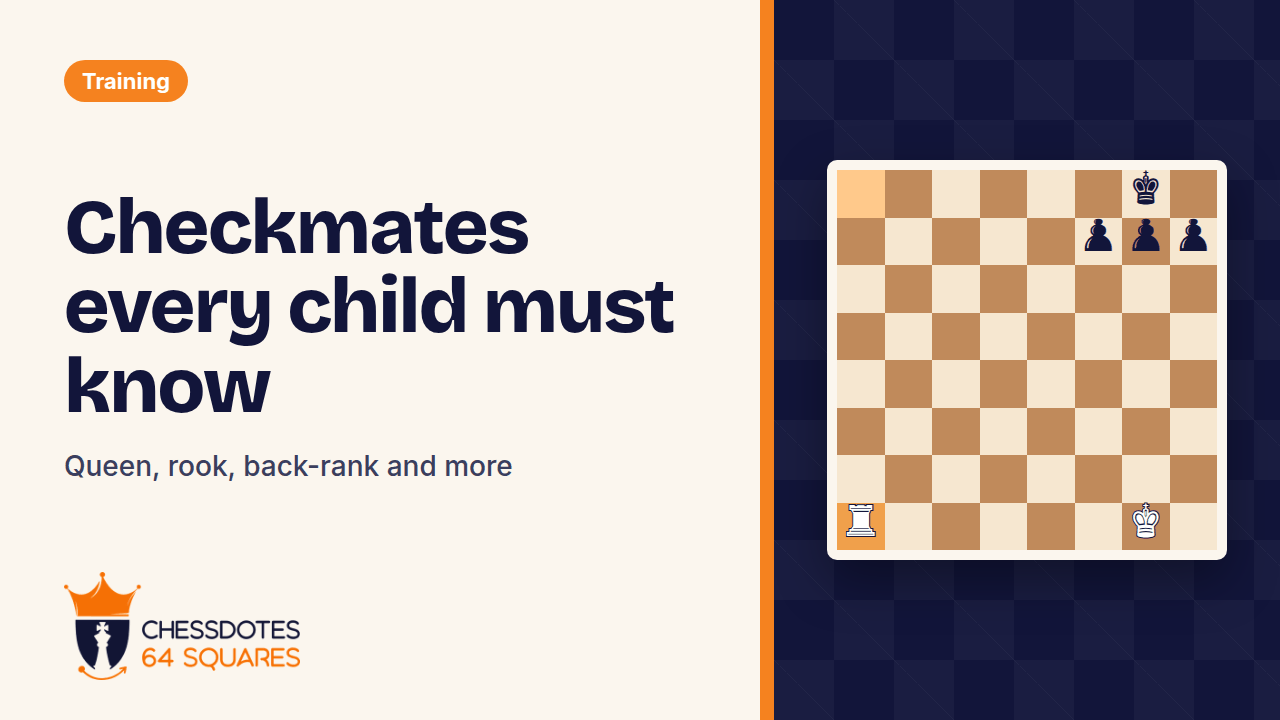
Basic checkmates every child must know
Queen mate, rook mate, back-rank mate, scholar’s mate and smothered mate: the checkmate patterns every young player must know, with diagrams and practice tips.
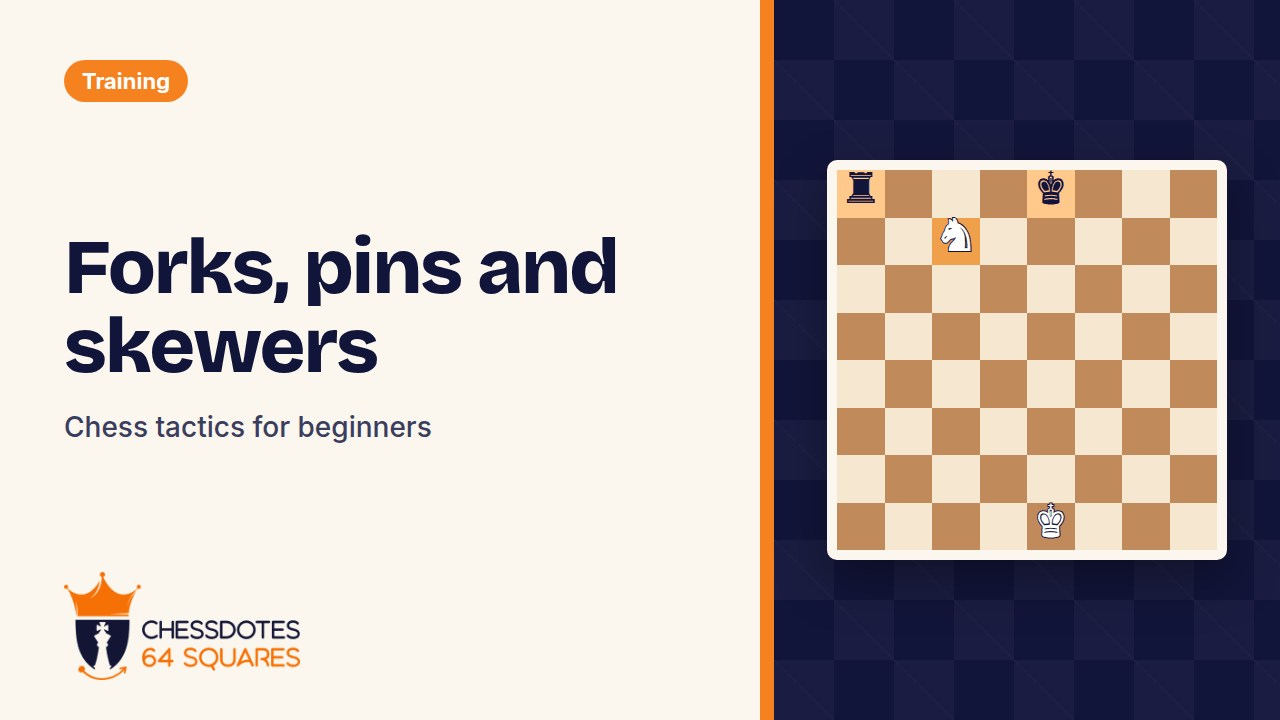
Chess tactics for beginners: forks, pins, skewers and more
Learn the tactics that win most beginner games: forks, pins, skewers, discovered attacks and double checks, with board diagrams and tips to spot them.

Chess ratings explained: FIDE, online ratings and what the numbers mean
What is a chess rating? How Elo works, the K-factor, how FIDE ratings differ from Chess.com and Lichess numbers, and what a good rating is for a child.
10 common chess mistakes beginners make (and how to fix them)
Leaving pieces undefended, moving too fast, ignoring threats: the 10 most common beginner chess mistakes, why they happen, and a simple fix for each.
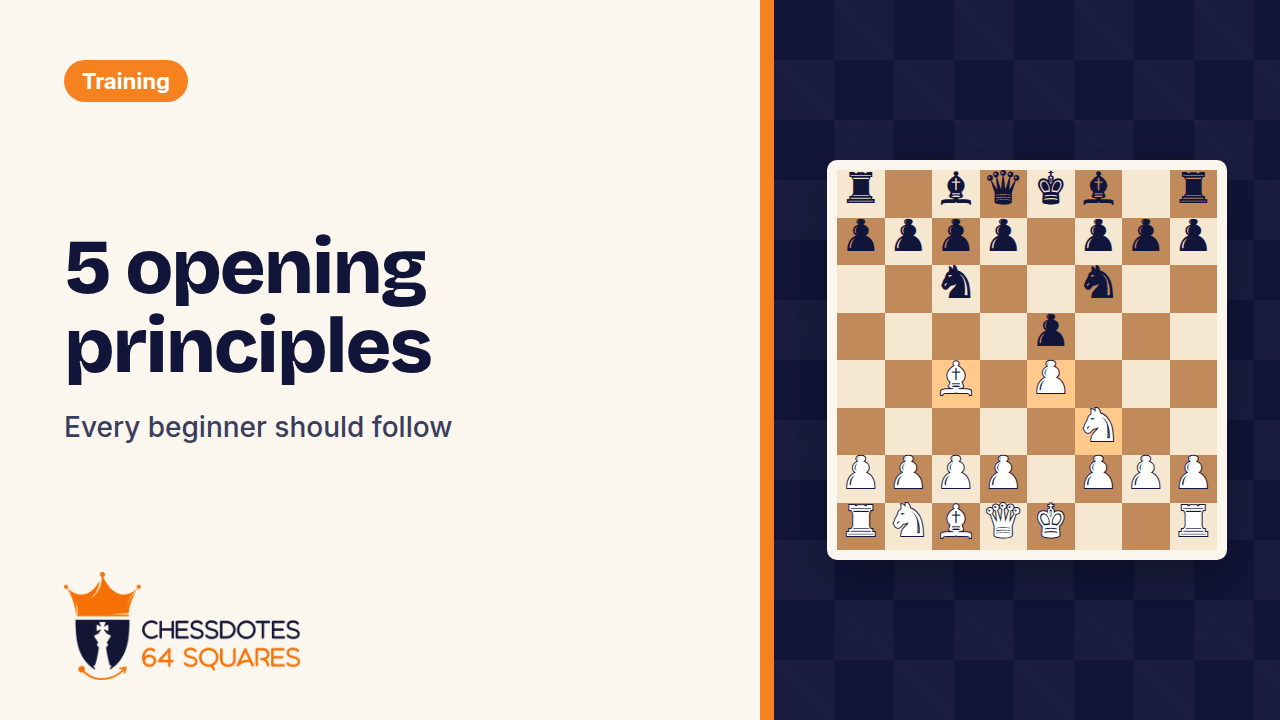
5 opening principles every beginner should follow
Don’t memorise openings yet. Learn the 5 principles that give you a good position in any game: centre, development, castling, queen safety and connected rooks.

Online or offline chess classes: which is right for your child?
Online or in-person chess coaching? An honest comparison of attention, flexibility, tournament readiness, cost and age suitability, and how to combine both.
How to practise chess at home: a 20-minute daily routine
A simple 20-minute daily chess routine for children: puzzles, one idea from class and one drill, plus a weekly plan, notebook method and tips for parents.
Tournament chess rules every player must know
Touch-move, j’adoube, illegal moves, draw offers, the 50-move rule, threefold repetition and more: the FIDE rules that decide real tournament games, explained simply.
From beginner to FIDE rated: a roadmap for young players in Maharashtra
How does a child get a FIDE rating in India? Step by step: basics, practice, local events, AICF registration, rated tournaments, your first rating and what comes next.